07
DEC
Infant Deathway - Akan Tradition
BY ELLA COLMENARES
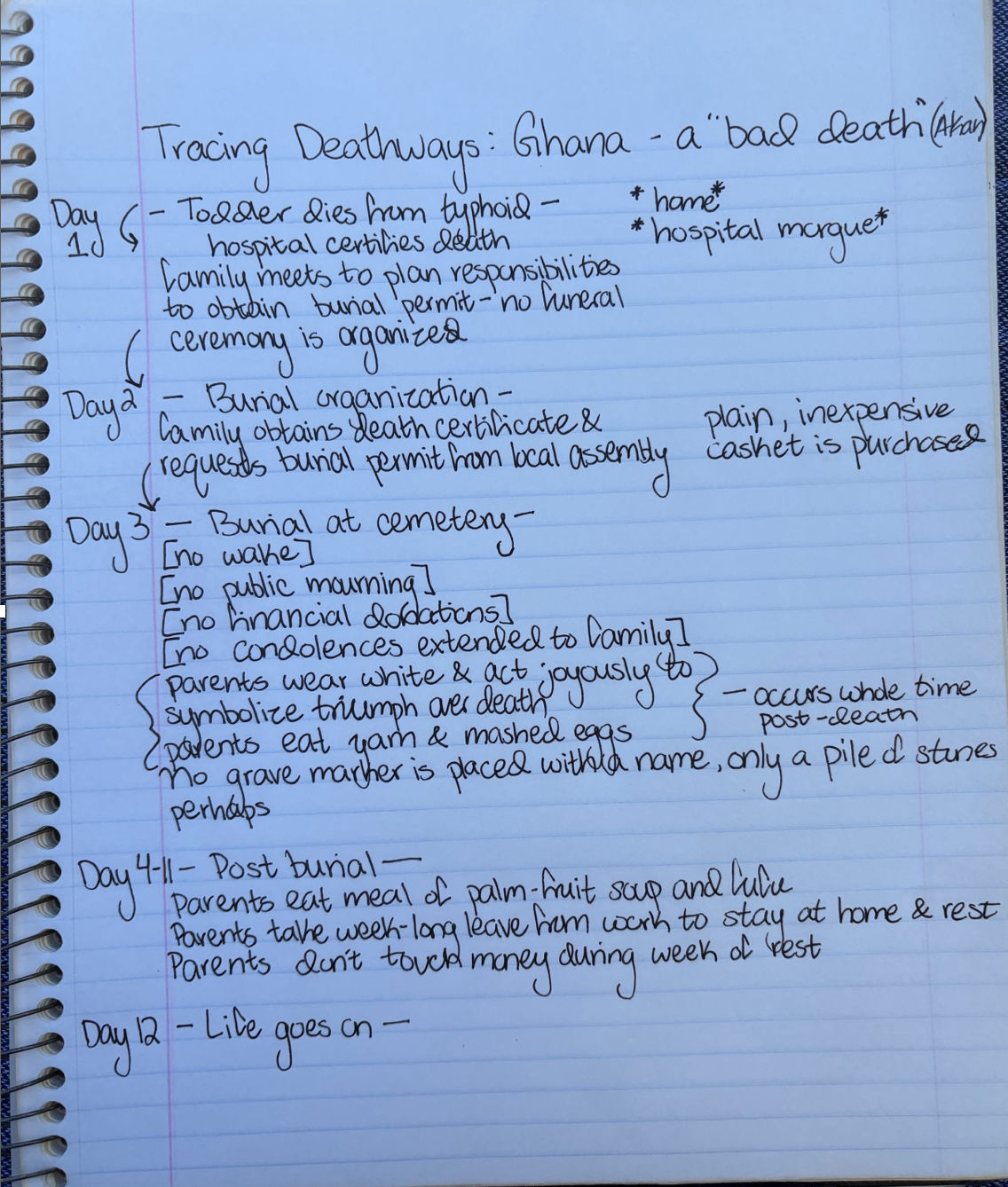
This deathway traces an Akan child’s death. Since dying at home is common practice in Ghana, I opted for the toddler to die there instead of a hospital although they were ill. Children are an essential element of Akan society, so their death is considered “bad” because it subverts the natural order that children will grow up and bury their parents, not the reverse. Due to the “bad” nature of a child’s death, the parents are expected to appear happy and wear white (associated with celebration) to not give death power or encouragement. If a child’s death is mourned with full funeral rites, then it is believed the mother could become infertile and there is a risk of similar deaths occurring. The lack of funeral rites and mourning in children’s deaths means a quick burial and short period of observance by the family, compared to the traditional 40-day observance with a 1-year memorial. In the past, a child’s corpse was mutilated and the body discarded as trash, but today society and government infrastructure require confirmation of death by a hospital, a death certificate from the birth and death registry, and a burial certificate from the local municipality.